2017-01-06

Translating -- the Song "Sayonara", by Off Course

Today's English programs on NHK included a segment on an English language version of a popular Japanese song called "Sayonara", by the band Off Course. I have a copy of it in my record collection back in the States, but not here. I think my wife has a copy in her smaller record collection stored at her parents' house. Anyway, I looked it up on the 'net.

Off Course was a Japanese folk rock band, active from the late 1960s to the 1980s. When I returned to the US after my two years as a missionary in Japan, some of their songs were among the music I took back with me.

(Their name was something of a pun in Japan, since -- especially at the time -- "of course" tended to be pronounced the same as "off course": "ofu kōsu".

Oh, here they are on Wikipedia, and here in Japanese.)

"Sayonara" was one of their bigger hits. People here who have never heard of the band will likely know the song.

It's tempting to post the Japanese lyrics, but I'll refrain. You can find them by searching the web, and I don't have permission to post them.

Translations are also supposed to trip over the current international copyright regime, but I do not feel all that bound by all of the vain imaginations of the so-called artists' associations that want to use copyright to establish their minor tyrannies and monopolies. Translation is creative work, and work that has entered the public milieu by way of copyright claims must have boundaries.

So here's my rough translation of the Japanese lyrics:


Sayonara
original lyrics by Kazumasa Oda,
new translation from Japanese by Joel Rees

Now, the end has come, and you look so small to me.
I have this unthinking urge to take you in my arms again.
Go! Leave me alone, I am not going to cry.
I look at your cheeks, wet by the tears that fall.
We are free, is what we used to say,
As if today was a day we would never think of.

Goodbye, farewell, sayonara!
Outside white winter comes.
I am sure it was only you I loved,
Only you the way you are.

Love is such a pitiful thing. Instead of mine
Tonight you may lie in someone else's arms.
I blush easily, so we'd find a hidden path
To walk along on those cold days you liked so much.

Goodbye, farewell, sayonara!
Outside white winter comes.
I am sure it was only you I loved,
Only you the way you are.

Today again outside, it's rain, and it will shortly turn to snow
That will, in our hearts fall and pile deep --
Fall, and pile deep.


I could work harder to fit it to the rhythm and rhyme, but I won't. I could also try harder to connect the stanzas through cultural interpolation, but I'll refrain from that as well.

There are limits to my time, and there is an English version which is pretty fully interpolated and carefully fit to the tune, anyway. Kantner, Balin, and Casady covered it in 1986 as the KBC Band, if you want to find it and listen to it.

After some search, I haven't been able to find out for sure who wrote the original English lyrics. They are definitely interpolated and much more detailed than my translation, probably trying to fill in cultural details [JMR201701131157: with the extra verse ].

The English language Wikipedia page on the KBC Band Album only references Oda, with no details. (I think it odd that they don't reference the band, since the Japanese page credits the band along with Oda on the music.)

The Japanese Wikipedia page on the song simply indicates that the KBC Band used the lyrics from a promotional video that Off Course put together in 1983 with the intent to try to break into the English language markets. [JMR201701131157: So I can't say who did that translation. I have the impression it might have been Oda himself, with the help with a native English speaking friend. ]

My father was not the only one who ever told me that you can't fully enjoy foreign language literary works unless you can enjoy them in the original language. I think it's true. [JMR201701131157: I also think someone raised outside the culture will still miss much of the symbolism and many of the references. ]

But I think we can try to appreciate them to a limited extent in translation, especially if we can find translations by different people. [JMR201701131157: So, having taken time I didn't really have to take a stab at it, I thought I'd share the results. ]

2017-01-05

Eikaiwall ch. 01 -- The Door in the Wall

A World in a Wall

An English and Japanese Language Adventure

by Joel Matthew Rees, Copyright 2017
...
adapted from, and extending
this Eikaiwa session
recorded fancifully in 1995.

Names, details, and events changed
... to protect the people to whom this didn't really happen.

Ch. 1 -- The Door in the Wall

「あの掛物の裏、なにがあるかな?」 Iwakazu asked absently of no one in particular.
-- Ano kakemono no ura, nani ga aru kana? [I wonder what's behind that wall hanging.]

His friend Yasufusa replied, 「壁ぇあろう。」
-- Kabe 'earō. [The wall, of course.]

「ちゃうやろう。やっぱり、なにかその裏にある。」
-- Chau yarō. Yappari, nanika sono ura ni aru. [I don't believe it. There's gotta be something there.]

Their other friend, Takeru, asked, 「なんでそう思わなアカン?」
-- Nande sō omowanaakan? [Why? What makes you think so?]

The three friends were sitting cross-legged around a low table on a raised tatami-dai in the second-story juku classroom where they were taking Eikaiwa lessons. Iwakazu was a third-year junior high (9th grader, or freshman) student and the other two were first-year high school (10th grader, or sophomore) students.

Iwakazu was insistent. 「怪しいや。絶対あやしい。怪しぉ思わへん?」
-- Ayashii ya. Zettai ayashii. Ayasho omowahen? [It looks suspicious. Definitely suspicious, don'cha think?]

「どうして?」 Takeru didn't think he was buying any fantasies today.
-- Dōshite? [How so?]

「影のところ、な、線あるやろう?それに、な、勝手口ぐらいの大きさや。」
-- Kage no tokoro, na, sen aru yarō? Soreni, na, katte-guchi gurai no ōkisa ya. [Well, see how there's a line right at the shadow? And the size is about right for a small utility door.]

Yasufusa shook his head. 「あれ、外の壁。ドアの向こうになにがある?」
-- Are, soto no kabe. Doa no mukō ni nani ga aru? [That's the outside wall. What would be on the other side of the door?]"

Takeru asked, 「でな、なにに使うぇあろう。」
-- Dena, nani ni tsukau earō. [And what would it be used for?]

「イヤ、めっちゃ怪しい。ドアあるやろう。ある、思わへん?」
-- Iya, meccha ayashii. Doa aru yarō. Aru, omowahen? [Nah, I think it's very suspicious. There must be a door behind it. Don't you think there's a door there?]

「さぁっ…」Yasufusa was beginning to look carefully at the pattern of shadows on the wall.
-- Saa ... [Well, ...]

Takeru was shining him on. 「考えすぎ。な、ジェームズ先生、あの壁掛けの裏、なにかある?」
-- Kangae-sugi. Na, Jēmuzu Sensei, ano kabe gake no ura, nanika aru? [You're imagining too much. Hey, James Sensei, Is there something behind that wall hanging?]

I was waiting for this. "Ask me in English."

The three boys put on their best dumbfounded expressions. Iwakazu started to joke around. 「発音良すぎ、わからへん。」
-- Hatsuon yosugi, wakarahen. [Your pronunciation is too good. Can't understand it.]

I repeated myself, slowly. "Ask. Me. In. English." The boys were still giving me expressions of incredulity. Raising my hands and pretending to be a hypnotist, I dropped into an exaggerated Japanese accent. "Asuku mii iin Iingurisshu."

The boys responded in chorus. 「イヤ、無理むりむりむりむり。勘弁してくれ!」
-- Iya, muri-muri-muri-muri-muri. Kanben shite kure! [Wait! No way! Huh uh! Give us a break!]

After a bit of negotiating and practice writing and asking what was behind, over, under, etc. several things in the room, the boys returned to the subject of the wall hanging.

This time, they asked me in English. Takeru led, "One, two, three," then all three chorused on cue, "What's behind the wall hanging?" It was pretty nice pronunciation, too.

[I can only wish I had had the teaching skills and Japanese to have pulled it off like James Sensei demonstrates here, back in 1995. It would have saved me a painful ten years' trip back through the computer industry that was always going someplace I didn't want to go.]

We all laughed, and I said, "I think it's just the outside wall, but I've never looked. Let's take a look."

I stood up and lifted the hanging to look behind it. It was an inexpensive printed scroll of the year's calendar on a background of plum blossoms and snow capped peaks and other Japanese seasonal symbols.

 "Hmm." I showed them the bare wall underneath where the scroll hung. "Looks like just the wall to me." I tapped the wall around where the scroll had hung, the taps echo hollowly -- tap, tap, tap, tap. "It does sound hollow, but most walls in Japan sound hollow."

I had to explain what hollow meant at that point: 「中が開いている、という感じ。うつろに響く。」
-- Naka ga aite-iru to iu kanji. Utsuro ni hibiku. [Like it's empty inside. echoes hollowly.]

To emphasize the point, I tapped again where I had found a beam, then between beams, just under where the hanging scroll had rested.

Whoosh!

Yasufusa exclaimed, 「エェッ!まっさか!なーなーなにヤ?」
-- Eh eh eh! Massaka! Naa naa nani ya? [Huh? Wha wha what?]

Takeru echoed his friend's concern. 「嫌だよ!先生どこに行ったん?」
-- Iyada yo! Sensei doko ni ittan? [Oh, no! Where's Sensei?]

Iwakazu didn't say anything, just stared.

[That is, James Sensei could have imagined it this way, if he hadn't been suddenly busy elsewhere. Since he can't tell you what happened next at the Eikaiwa juku, I'll have to take over.]

Iwakazu came out of his shock first, but he was in denial. 「先生、今日、来てた?居らへんかったん、ちゃう?」
-- Sensei, kyō, kiteta? Orahenkattan, chau? [Sensei, today, was here? He never showed up, right?]

Yasufusa slapped his friend back-of-the-head a little harder than he intended. 「お前悪い。あの馬鹿な掛物のことを気にするもんか?」
-- Omae warui. Ano baka na kakemono no koto wo ki ni suru mon ka? [It's your fault. Who'd pay attention that stupid hanging scroll?]

Takeru stood up and went to the wall, tracing around the scroll, which now hung as if nothing untoward had happened. None of the shadows that had raised Iwakazu's curiosity were in evidence, but he tried to trace around where they had seen the door open for a brief moment. Then he started tapping -- tap, tap, tap, ...

「オイオイ、気をつけろ!」 Yasufusa jumped up and held Takeru's hand away from the wall.
-- Oi oi, ki wo tsukero! [Hey! Watch what you're doing!]

Iwakazu stood up and joined his friends around the hanging scroll, examining the wall and the scroll, looking for seams or cracks. He even dared tap the wall once or twice.

「手持って。」 Takeru extended his hand to Iwakazu.
-- Te motte. [Grab my hand.]

Iwakazu looked at the hand quizzically.

「持ってってば。しっかり持って。やっすん、イワちゃんの手を持って。あちの壁へ行って。」
-- Motte 'tteba. Shikkari motte. Yassun, Iwachan no te wo motte. Achi no kabe 'e itte. [Didn't I tell you to grab it? Yasu, grab Iwa's other hand and go to the other wall over there.]

Yasufusa understood and did as he was told.

Then Iwakazu picked up on the plan and grabbed Takeru's arm in a death grip. But he expressed his disagreement. 「イヤよ!」
-- Iya yo! [I don't like this!]

Takeru proceeded to tap around the wall randomly.

「あち。おち。それ。それ。」 Iwakazu gave his opinion of where he should tap, trying to recall where they had seen James Sensei tapping.
-- Achi. Achi. Sore. Sore. [There. There. That. That.]

But nothing happened.

Yasufusa suggested, 「比嘉さんに言ってたほうがええ?」
-- Higa-san ni yutteta hō ga ē? [Shouldn't we tell Mrs. Higa?]

「なにを?あの、あんたらは何をしてはる?」 Mrs. Higa had just come to the door and had heard him. 「先生は?」
-- Nani wo? Ano, antara wa nani wo shite haru? [Tell me what? Wait. What are you boys up to?]
-- Sansei wa? [Where's your teacher?]

All three looked at her in surprise. Iwakazu blurted out, 「消えた、よ。」
-- Kieta, yo. [He disappeared!]

Yasufusa and Takeru looked at him with expressions that might have been intended to warn him off.

But Mrs. Higa misinterpreted him. 「おトイレですか?」 She left them and went down the stairs to the middle landing, where the toilet was.
-- O-toire desu ka? [Has he gone to the toilet?]

「何を言ってる?」 Yasufusa chided Isakazu.
-- Nani wo yutteru? [What are you saying?]

Takeru was thinking out loud. 「でも、本当に消えている。どっかに行くつもりだったはずもない、し。」
-- Demo, hontō ni kiete-iru. Dokka ni iku tsumori datta hazu mo nai, shi. [But he really did disappear. It's not like he went somewhere on purpose.]

They could hear Mrs. Higa knocking on the toilet door. -- Knock, knock. --「先生?大丈夫ですか?」
-- Sensei, daijōbu desu ka? [Sensei, are you all right?]

They listened hopefully, but heard no response. They did hear a faint click, like a light switch being turned on below them.

「見てたよ、このカレンダーの壁掛けを。」 Takeru was still thinking out loud.
-- Miteta yo, kono karendā no kabekake wo. [She was looking at this calendar wall hanging.]

Mrs. Higa's voice drifted up from the stairwell. 「突然に胃が悪くなりましたのですか?」
-- Totsuzen ni i ga waruku narimashita no desu ka? [Oh? Your stomach suddenly started acting up?]

「居る?」 Yasufusa clearly wanted a simple explanation.
-- Oru? [You think he's there?]

「そんなわけあらへん。」 Takeru was definitely not convinced.
-- Sonna wake arahen. [No way.]

From the stairwell, 「授業できなさそうですか。」
-- Jugyō deki nasasō desu ka. [So you won't be able to finish the lesson?]

「都合の良さすぎる。」 Iwakazu was also doubtful.
-- Tsugō no yosa sugiru. [Too convenient.]

「まあ、岩一くんらはがっかりすると思いますけど、仕方がありません、ね。」
-- Maa, Iwakazu-kunra wa gakkari suru to omoimasu kedo, shikata ga arimasen, ne. [Iwakazu and his friends will be disappointed, but what else can we do?]

「どうする?」 Iwakazu was the one who asked.
-- Dō suru? [What should we do?]

「レッスン5の途中ですね。やります、よ。三人から聞けばいいですね。」
-- Ressun go no tochū desu ne. Yarimasu, yo. San-nin kara kikeba ii desu ne. [In the middle of lesson five? I'll finish it. I can ask the boys where, right?]

「先生がそんなん言わへん。」
-- Sensei ga sonnan iwahen. [Sensei would not be saying that.]

Yasufusa wasn't willing to consider the possibility that Mrs. Higa was trying to fool them into thinking that James Sensei was there. 「だけど、先生は確かに不基準的なやり方。」
-- Dakedo, Sensei wa tashika ni fu-kijunteki na yarikata. [Well, James Sensei does use irregular methods.] 

The other two looked at him.

「乗ったほうがいいと思う。」
-- Notta hō ga ii to omou. [We should play along.]

「誰の演技に乗る?」 Takeru was not really asking, though.
-- Dare no engi ni noru? [Play along with whom?]

「だって、先生かわいそう。辞めさせられるかも知らへん。」
-- Datte, Sensei kawaisō. Yamesaserareru ka mo shirahen. [Think of poor James Sensei. He could get fired.] 

「先生、本当に大丈夫かな?」 Iwakazu voiced there concern.
-- Sensei, hontō ni daijōbu kana? [Will Sensei be okay?]

「比嘉さんに任せたほうが良いと思う。」
-- Higa-san ni makaseta hō ga ii to omou. [I think we should let Mrs. Higa take care of it.]

Mrs. Higa came back in the room at this point. She clapped her hands primly. "Okay boys, back to work."

"Huh?"

Yasufusa translated. 「勉強に戻るって。」
-- Benkyō ni modoru 'tte. [She's telling us to get back to studying.]

"It's too early to close your textbooks. Let's open them back up to page fifty-three. That's where you are, isn't it?"

Caught off-guard by Mrs. Higa's speaking English, they boys opened their books and pretended to be picking things back up in the lesson they had never started.

"Repeat after me: 'Where are you going?'"

Three boys chorused: 「ホォエアー アール ユー ゴーイング。」
-- Howeā āru yū gōingu. 

"No, no, not 'ho-weh-ah', not 'fu-eh-ah', either. It's 'where'."

When she was satisfied with their pronunciation, she worked with them on the grammar of replies. Shortly, it was time to end the lesson. She asked the boys, "Where are you going after class?"

「授業の後、どこに行くのさ。」 Takeru translated this one.
-- Jugyō no ato, doko ni iku no sa. [She's asking where we are going after the lesson.]

"That's right."

"I'm going to study math at Mr. Kuwahara's juku." Yasufusa volunteered.

"I'm going to Mr. Kuwahara's juku, too, but I will be studying chemistry." Takeru replied next.

"I will go to Ms. Horiuchi's juku to study Japanese." Iwakazu took his turn. Then, without thinking, he added, "but I'd rather go through the wall to find James Sensei."

Mrs. Higa was taken by surprise.

「イエイ。やるやん。」 Takeru approved of his friend's sudden attack.
-- Yei. Yaru yan. [Hey, there you go, guy!]

"Whatever are you talking about?" Mrs. Higa recovered quickly.

「解かってるでしょう。」 Takeru joined the attack.
-- Wakatteru deshō. [You know what we are talking about.]

"James Sensei is in the toilet trying to recover from a bit of stomach distress. Do you want to break through the toilet wall?"

「無理か。トイレに入っているって。」
-- Muri ka. Toire ni haitteiru 'tte. [No use. She insists he's in the toilet.]

Yasufusa jumped to Mrs. Higa's defense. 「当たり前。あっ。幸代。」
-- Atari mae. Ah. Sachiyo. [Of course. Oh, hello, Sachiyo.]

「や、…」Mrs. Higa's daughter, Sachiyo came in the room. Her mother warned her with a look. "Oh, hi, guys. How was the lesson?"
-- Ya, ... [Hey! ...]

Taking advantage of the distraction of Sachiyo's arrival, Mrs. Higa managed to send the boys home.

「来てくれた、幸。」
-- Kite kureta, Sachi. [Sachi, you came.]

「来ないんか。」
-- Konain ka? [Would I not come?]

Mrs. Higa immediately went to the wall and tapped in four specific places, then stepped away from the wall. 「開くかしら?」
-- Hiraku kashira? [Will it open?]

Whoosh!

A hand appeared near the floor, grasping the edge of the doorway that opened. Then another, grasping the opposite edge.


(Next)


Table of Contents

  1. The Door in the Wall
    In which a sensei disappears, mid class.
  2. (TBA)

2016-12-31

PTA English December Notes -- Christmas Party, with Games

I didn't get these notes done before the end of the year this time, either.
[get ... done => …を済ます(済ませる)]
[before the end of ... => …内]
[this time => 今度]
[either => どちらも、これでも(今度も)]

We met in one of the electives classrooms, to give us more room for the party.
[meet => 集合する (meet met met)]
[one of ... => …の一つ]
[elective => 選択教科]
[more room => (場所などの)余裕]
[to give us more room for ... => …のための余裕ができるように]

We played three word games in English, for practice.
[word game => (しりとりなどのような)言葉遊び]

  • First, we played the game we played last time, "Never have I ever ...."
    [the game {that} we played {the} last time => 先ほどやったゲーム]
  • Then we played a variation of "Matthew, Mark, Luke, and John", using numbers instead of books of The New Testament in The Bible.
    [variation => 形を変えたもの]
    [instead of ... => …のかわりに]
  • After that, we played "The Minister's Cat".
    [minister => 牧師、お僧、大臣など]
At the end, we exchanged presents by drawing lots. I should have left more time to talk about the presents, I think. Sorry about that.
[exchange => 交換する]
[drawing lots => くじを引くこと]
[should have ... => …にしたほうが良かった]
[leave time => (予定に)時間をあける]


Never Have I Ever


The rules are in the notes for the previous lesson, but I'll summarize them here:
[summarize => 短くまとめる]

(This game is also on Wikipedia.)
  • Everyone holds up ten fingers.
    [hold up ... => …を上に持つ、出す]
  • Each turn goes like this:
    [turn => 番、当番]
    [... goes like this => こういうふうに行く、こんな感じでやる]
    1. The person whose turn it is tells something he or she has never done:
      [tell => おしえる、話をする] [something ... has never done => …は、やったことごないもの]
      Never have I ever _____.
    2. Everyone who has done that thing folds one finger down.
      [everyone who has ... => …をやったことがあるみな]
    3. Anyone who has folded all ten fingers down is out. 
      [anyone who has ... => …をやったことがあるだれでも]
      [fold down => 下ろす]
      [out => 負けた(状態)]
  • The last person with fingers remaining up wins.
    [fingers remaining up => 指が立ったまま残っている]
[解釈は先月のノートをご参考下さい。]

The unusual grammar is for emphasis:
[unusual => 変わった、普通ではない]
[grammar => 文法]
[emphasis => 強調]
[=> 珍しい文法は強調のためです。]
  • I have never flown like a bird.
    [鳥のように飛んだことが一度もない。]
  • I have never ever flown like a cat.
    [猫みたいに飛んだ(或いは逃げ出した)ことは絶対に無い。]
  • Never have I flown like an airplane.
    [一度も飛行機みたいになって飛んだことがない。]
  • Never have I ever flown like a banana.
    [バナナのように飛んだことは一切に、絶対にありません。]
[fly => 飛ぶ、逃げ去る (fly, flew, flown)]
[coop => かご、おり、小屋 (chicken coop == 鶏小屋)]
[fly the coop => おりを羽ばたいて逃げる]

[put/fold a finger down => 指をおる ("bend"はここではあんまり使わない。)]

helicopter (fly, flew, flown)
Never have I ever flown in a helicopter.
ghost (see, saw, seen)
Never have I ever seen a ghost.
pony [子馬] (ride, rode, ridden)
Never have I ever ridden a pony.
Korea -- day trip (go, went, gone)
Never have I ever gone on a day trip to Korea.
cruise around the world
Never have I ever gone on a cruise around the world.
tequila [テキーラ] (drink, drank, drunk)
Never have I ever drunk tequila.
snowboard (ride, rode, ridden)
Never have I ever ridden on a snowboard.
Never have I ever gone snowboarding.
viola [楽器のヴィオラ] (play)
Never have I ever played the viola.
Aomori
Never have I ever gone to Aomori.
diamond [ダイヤモンド:(ダイ・モンド)] (buy, bought, bought)
Never have I ever bought a diamond.
Dubai Atlantis Hotel (stay)
Never have I ever stayed at the Atlantis Hotel in Dubai.
[Dubai => ドバイ]]
[United Arab Emirates => アラブ首長国連邦]
scuba diving [スキューバ] (go, went, gone)
Never have I ever gone scuba diving.
St. Nick (Saint Nicholas) / Santa Claus (meet, met, met)
Never have I ever met St. Nick.
Iceland
Never have I ever gone to Iceland.


Matthew, Mark, Luke, and John


This is a group game useful for memorizing lists. The name comes from the list of names of books of the New Testament (in the Bible), which is not easy to memorize. But it can be used for other lists, like numbers in English or Japanese.
[group game => グループで遊ぶゲーム]
[memorize => 覚える、暗記する]
[comes from ... => …由来]
[can be used for ... => …にも使ってもいい]

(This is a simple game. It's a lot easier to play than to explain. If you are not embarrassed to be seen, practice while you read the description. That makes it simple to follow along.)
[easier to play than to explain => 説明するよりはやるのが簡単]
[not embarrassed to ... => …に恥ずかしくない]
[pratice while ... => …しながら練習する]
[description => 描写、説明]
[makes it simple to ... => …をやりやすくする]
[follow along => ついていく]

Everyone should sit in a circle.
[輪になって座る]

The rhythm is counted in four.
[四拍子のリズムです。]

The leader should show the rhythm. Clap your hands twice on your knees on one and two, then once together in front of you, then rest:
[clap hands on knees => 膝に手拍子]
[clap on one and two => 1、2に拍子を]
[clap hands together => 手を併せて手拍子]
[in front of ... => …の前に]
[rest on four => 4に音を鳴らさない]
Clap (knees), clap (knees), clap (hands), rest. 

After demonstrating the clapping twice or so, have everyone practice the rhythm in unison once or twice.
[in unison => 皆揃って、一致して、同度に]

Now demonstrate the rhythm, saying the first word in the list on the third count, then the second word, then the third, then fourth:
[saying ... => …を唱えて]
Clap (knees), clap (knees), clap (hands) -- "Matthew", rest.
Clap (knees), clap (knees), clap (hands) -- "Mark", rest.
Clap (knees), clap (knees), clap (hands) -- "Luke", rest.
Clap (knees), clap (knees), clap (hands) -- "John", rest.

If you are doing it with numbers, it will be
[数字の場合]
Clap (knees), clap (knees), clap (hands) -- "one", rest.
Clap (knees), clap (knees), clap (hands) -- "two", rest.
Clap (knees), clap (knees), clap (hands) -- "three", rest.
Clap (knees), clap (knees), clap (hands) -- "four", rest.

Then have everyone practice the first part of the list in unison. If the list is hard for some in the circle, you may want to practice the whole list in unison.
[the first part of the list => リストの頭部の何個]
[if ... is hard => …が難しかったら]
[for some => 何人かにとって]
[you may want to ... => …が望ましいかも知らない]
[whole list => リスト全体("whole"と"hole"は同音意義です。)]

Next, have everyone in the circle number off, starting with the leader -- The leader is Matthew, the next person to the right is Mark, the next is Luke, and so on. Or, if using numbers, the leader is one, the person to the right is two, etc.
[have everyone ... => 皆に…をやってもらう]
[number off => 順に追って唱える]
[next to the right => 右の人]

(Or you might use ordinals: "first", "second", "third", etc. Any list of words will work.)
[ordinals => 序数]
[work => 巧く行く、適用できる]
[any will work => どれでもいける]

A list of books of the New Testament (more information here) is as follows:

  1. Matthew [・シュー]
  2. Mark [マーク]
  3. Luke [ルーク]
  4. John [ジョン]
  5. Acts [アックツ]
  6. Romans [ロー・マンズ]
  7. Corinthians (1st & 2nd) [コ・リン・シ・アンズ]
  8. Galatians [ガ・レー・シャンズ]
  9. Ephesians [エ・フィー・ジャンズ]
  10. Philippians [フィ・・ピ・アンズ]
  11. Colossians [コ・ロー・ジ・アンズ]
  12. Thessalonians (1st & 2nd) [・セ・ロー・ニ・アンズ]
  13. Timothy (1st & 2nd) [ティ・モ・シー]
  14. Titus [タイ・タス]
  15. Philemon [フィ・レ・モン]
  16. Hebrews [ヒー・ブルーズ]
  17. James [ジェームズ]
  18. Peter (1st & 2nd) [ピー・ター]
  19. John (1st, 2nd, & 3rd) [ジョン]
  20. Jude [ジュード]
  21. Revelation [・ヴェ・レー・ション]
If you have more than twenty-one in the circle, you can use First and Second Corinthians, etc., but that requires speaking very quickly.
[if more than ... => …より多い場合]
[First Corinthians => コリント人への第一の手紙]
[that requires ... => …が必要]
[quickly => 素早く]

One popular option is starting with Matthew, Mark, Luke, and John, then shifting to numbers, one, two, etc.:
[popular option => 人気ある別のやり方]
[start with ... => …として初めて]
[shift to ... => …に切り替える]

Matthew, Mark, Luke, John, one, two, three, ...

Now that everyone is comfortable with the list and the rhythm you might want to go around the circle one more time, in rhythm, everyone clapping, but only the person whose turn it is speaking his or her own name or number.
[now that ... => …になっていて]
[everyone is comfortable with ... => 皆が…に慣れてきている]
[you might want to ... => …にしてもいいかも知らない]
[go around one more time => もう一回周る]
[in rhythm => 拍子に乗って]
[everyone clapping => 皆拍子を鳴らして]
[person whose turn it is => 順番の人]
[only ... speaking => …のみが唱えて]
[his or her own => 自分の]

Now you are ready for the beginners' level game.
[beginners' level => 初心者のやり方]

The leader starts the rhythm, with everyone clapping. On the third count, he says the name or number of the next person to lead.
[on the third count, he says ... => 3に…を唱える]
[... of the next person => 次の人の…]

Without breaking rhythm, the new leader names the next person to lead, and so on.
[without breaking the rhythm => 拍子を外さず]

When someone misses, everyone stops, and then that person starts the rhythm again.
[when ... misses => …がミスを起こすと]
[that person => (ミスを起こした)その人]

When everyone feels comfortable with the first level, take it up a level. At this level, the leader is not silent on the first two counts, but says his own name or number. :
[take it up a level => レベルをあげる]
[not silent => 黙ってはいない]
[says his own ... => 自分の…を唱える]
Matthew: Clap, "Matthew"; clap, "Matthew"; clap "Mark"; rest.
if Matthew picks Mark to continue.
[picks ... to continue => 続く(人)に…を示す(当てる)]

Then, if Mark picks Acts to continue,
Mark: Clap, "Mark"; clap, "Mark"; clap, "Acts"; rest.
If Acts then picks Philippians, 
Acts: Clap, "Acts"; clap, "Acts"; clap, "Philippians"; rest.
And if Philippians then picks Galations,
Philippians: Clap, "Philippians"; clap, "Philippians"; clap, "Galations"; rest.

Doing that in numbers, 1, 2, 5, 10, 8, ...:
One: Clap, "one"; clap, "one"; clap, "two"; rest.

Two: Clap, "two"; clap, "two"; clap, "five"; rest.

Five: Clap, "five"; clap, "five"; clap, "ten"; rest.

Ten: Clap, "ten"; clap, "ten"; clap, "eight"; rest.
At the next level up, a person who misses the rhythm goes to the end of the circle, and everyone after that person moves up one, taking new names or numbers.
[a person who misses ... => …を外れる人]
[goes to the end => 末尾に移動する]
[everyone after that person => その(拍子を外れた)人の後の人皆]
[moves up one => 一つ頭の方へ]
[taking new names or numbers => 新しい(一の)名前や番号に変えて]

We did a round of using numbers so everyone could get used to it.
[round => 一回り]
[so everyone could get used to it => 慣れていけるように]

I suggested that, if starting from one is too easy, the list could start from eleven.
[suggest => 提案する、勧める]
[the list could start from ... => リストが(1の替りに)…から始まってもいいでしょう]


The Minister's Cat

(This game is also on Wikipedia.)

In Japanese, there is a game called "Taking the Tail", or 「尻取り」 (Shiritori). It's a word association game, where, in each turn, you think of a word that starts with the final (on, loosely, syllabic character, or mora) of the previous word.
[there is ... => …はあるよ!]
[called ... => …という]
[tail => 末尾、尻尾]
[word association => 言葉の関連性]
[in each turn => 交代交代]
[think of ... => …を考えだす]
[starts with ... => …で始める]
[final ... => 末尾の…]
[syllabic > 音節の]
[mora => (かなの)泊、一つのかなの音]

There are English-language word games similar to Shiritori, called Word Chain games, in which you can start the next word with either the last sound or the last letter of the previous word.
[word game => 言葉で遊ぶゲーム、言葉遊び]
[similar to ... => …のような、…に似た]
[chain => 関連、関連性]
[in which ... => …になる、その中に…がある]
[can start with either A or B => A でも B でも始めてもいい]
[start the word with ... => …でその言葉を始める(その言葉が始める)]
[last sound => 最後の音(発音)]
[last letter => 末尾の文字]

There is also a game known as The Minister's Cat, in which you think of words to describe the cat according to their first letter.
[there is also ... => …もある]
[known as ... => …として知られる]
[minister => 牧師、僧、大臣]
[describe => 描写する、(想像できるように)説明する]
[according to ... => …に応じて、…に従って、…と一致して]
[first letter => 頭文字]

There are two versions. In the easy version, the first person says an adjective for the cat that starts with "A", the second thinks of a word that starts with "B", and so on, each player using the next letter of the alphabet in turn.
[easy version => やりやすいやり方、優しいバージョン、簡単版]
[adjective => 描写する語彙、形容詞]
[word that starts with ... => …で始める語彙]
[and so on => など]
[using ... => …をあてて]
[next letter in turn => 交代交代次の文字]

In the harder version, all players think of words that start with "A". When they have gone around the circle, or when no one can think of any more words, they start on words that begin with "B".
[harder => 難い、難しい]
[when they have gone around ... => …を回ったところ]
[no one can think of ... => 誰も…を考え出せない]
[any more ... => これ以上の…]
[start on ... => …でやりだす]

To make the game competitive, players who can't think of a word are out.
[make ... competitive => …を競争的にする]
[who can't think of ... => …を考え出せない]
[are out => 負けたものとする]

We played one round of the easy rules version of this game, in rhythm:


amicable
友好的な
The minister's cat is an amicable cat.
brilliant
天才ある
The minister's cat is a brilliant cat.
cute
可愛い
The minister's cat is a cute cat.
dangerous
危険な
The minister's cat is a dangerous cat.
elegant
気質のある、優美な、洗練された、品の良い
The minister's cat is an elegant cat.
foolish
思慮分別のない、愚かな
The minister's cat is a foolish cat.
giant
でかい、巨大な
The minister's cat is a giant cat.
happy
幸せな、嬉しい
The minister's cat is a happy cat.
innocent
無邪気な、無罪な
The minister's cat is an innocent cat.
(gentle は "j" ではなかった)
優しい、丁重な、物柔らかな
The minister's cat is a gentle cat.
jealous
嫉妬深い、ねたむ
The minister's cat is a jealous cat.
kind
親切な、思いやりのある、寛大な
The minister's cat is a kind cat.
luxurious
豪華な
The minister's cat is a luxurious cat.
(The minister's cat has luxurious fur.)
magical
魔法ある、魅力ある
The minister's cat is a magical cat.
(honest は "o" ではなかった)
味目で正直な、真実しか言わない
The minister's cat is an honest cat.
old
年老いた
The minister's cat is an old cat.
printed
印刷された(つまり、猫の絵か、猫の写真)
The minister's cat is a printed cat.


 [JMR: Actually posted January 2nd, 2017 -- had to preserve links.]

2016-12-26

Simplifying Life ch01-2 -- The Serious Constable

(Previous) (TOC) 注釈

"Uhnm, Danielle, ..." Michel stopped as they entered the shade in the little airport's waiting area.

"Hmh?"

"Would you mind if I pray out loud?"

"I've been praying in my heart."

"So've I, but I'd like to be a little more formal."

"Free-ists do formal things!"

"As you know."

"Yeah, I know. Go ahead. But I want my three minutes, too. It's about noon, anyway."

Across the tarmac, Omega took notice. "They've stopped. What are they doing?"

"The girl says she wants seafood?"

"Mitch is looking down now. Sonofagun. He's praying."

[That's actually a literal translation of the expression of surprise he used. The origins of the expression were pretty blasphemous in their language and culture, too, although nobody really thought about such things there, any more than we do here.]

"It couldn't hurt them."

In his prayer, Michel offered gratitude for their safe arrival and prayed for help, guidance, and protection for both of them for the remainder of the trip.

When he was done, Danielle said, without irony, "Thanks for including me in your prayer," and took a prayer rug from her backpack. She spread it out and knelt on it, and then proceeded to recite her noon prayers.

Beta was also watching at this point. "Prayer rug," she observed, to no one in particular. Then she added, "Their differences in religion don't seem to bother them too much."

"That's a good sign, maybe?" Omega was listening.

"Yeah. but it won't hurt to make sure."

Finishing with her formal prayers, Danielle also added prayer for protection and guidance for both of them, mentioning their families as well.

"And you included my family as well as yours. Thanks."

Danielle stood up and put her prayer rug away. "Didn't think you'd mind. Do we really have to ask each other's permission to pray any more?"

"Well, maybe, but I won't learn about your traditions unless you tell me."

"And I won't understand yours. Good point. So, what do you think we should do?"

"Too bad the airport doesn't have the staff to man the airport radio so we can call Professor Stewart from here. Let's go into town and see if we can find a place where we can call. Might eat something while we're there."

"I'm good with that. And maybe we'll find the constable."

"Maybe so."

They waved and called out to the two pilots, who waved back. Leaving their luggage where it was, they walked through the small airport lobby and out to the road in front. The road stretched straight away from the airport through sparse forest towards a cluster of buildings in the distance.

"The professor said a blue lamp would be an inn, where they'd have a radio. And a white lamp would be a restaurant. Maybe we could try the local cuisine while we're here."

"And a place with on orange lamp would be the constable's office. But there are no buildings closer than two hundred paces. And I don't see any lamps from here."

[Well, that's two-zero-zero base sixteen. 200sixteen -- 512ten. No, they don't have eight fingers on each hand. Just as some of our mathematicians and scientists became enamored of ten, some of their mathematicians and scientists had become enamored of base two a long time in their past, and most of the advanced countries in their world commonly used base sixteen and base eight for ordinary numbers.

Anyway, when I translate something someone in this novel says as "hundred", assume it means 100sixteen (or 256ten) unless I tell you it means 100eight (64ten). I'll try hard to warn you when someone is using base eight. Don't expect base ten, okay?]

"Well, the road leads only one direction, anyway." Danielle pointed towards the cluster of buildings.

"Don't see any taxis, either. I guess we walk."

It was not an unpleasant walk to the village. There was a path through the trees near the road, and the forest there was not too wild.

"This road is beautiful. Tangerine would be jealous."

"I'm sure she would."

"I wish she'd come. Sometimes I think she's jealous of you."

"I don't know why."

"You know."

"Do I, really?"

Danielle looked a little sharply at Michel. "I'm glad we aren't the same race. You're just a tad cold for my comfort, even for a free-ist."

Michel returned her gaze with a questioning expression, then, hearing footsteps ahead of them, looked back towards the path. "Who's that?"

The uniformed man approaching them hailed them by name.

"Forthright Michel? Sagewater Danielle?"

"By whom are we addressed?" Michel asked the protocol question.

The man replied, but not in protocol. "I'm Serious Sirius, the part-time constable here. I'm sorry I'm late. We had some sudden business come up in town." The protocol information was there, buried in the apologies, but it was clear that the islanders had different traditions from Michel and Danielle.

[No, I'm not joking around. He was named after the star we know as Sirius, and his family was known as the Serious family. It rhymed in the local island language, as well, which seems rather too much of a coincidence, but it is what it is. What can I say?]

"Constable Serious?" Both Michel and Danielle were a bit relieved.

Constable Serious showed them his ID. He was one of maybe three people living on the island who carried picture ID, for whatever that's worth.

"Your Professor Stewart asked me to check on you, and make sure you found our vagabond pilots."

"Hah. Vagabond pilots. The professor said they weren't exactly regular. Beta is a woman." Danielle was a little pointed in her tone.

"You've met them, ..."

"We met a rough-looking pair who called themselves Beta and Omega, claimed to know our names, and claimed to be our pilots." Michel took his turn to express a willingness to be corrected. "I'm not sure but they deliberately switched our names around."
 
"That would be Beta. Her sense of humor sometimes catches you by surprise."

"That's good to know," Danielle observed. "They suggested we get lunch while they pre-flight the plane."

"Typical. They could have had the plane checked over and fueled and waiting for you." Serious paused. "You didn't bring food for the long flight?"

"Sure we brought some. But we want to call the professor. And we could try the local cuisine."

"Great idea. We can arrange that, both the call and the lunch. But I need to talk with your pilots. Actually, if you wait for me, I'll open up the radio shack at the airport, and then I can show you around the town."

"Thanks, it'd help. Uhm, is that okay with you, Michel?"

"It sounds good to me."

Turning around, they looked again at the airport from the outside. The facade was a little overbuilt for the island, but not tastelessly so. From the front, the structure actually blended well into the surrounding jungle.

As they walked, Constable Serious told them about the airport. "At one time, we planned for it to serve ten flights a day. But my fellow islanders are mostly happy traveling by boat. And nobody has been willing to go to the trouble of certifying as a pilot. Well, no one but Beta and Omega, anyway."

Back at the airport, Sirius asked Beta how their fuel would hold up.

"Well enough."

"Can you pick up a woman on the next island over?"

"Beryl." Omega's voice showed concern. "The baby's still in breach?"

"They aren't sure, and she's having difficulty."

"No problem." Beta unbent herself from her examination of the landing gear and went over to the wall. An auxiliary tank hung there, and she took it down and brought it back to the plane. Omega stepped out of the plane and held the tank in place while she latched it down and tied safety straps over it.

"But we'll take some extra fuel to make sure," Omega commented.

Michel spoke up. "I'm a registered nurse back home. I've helped in obstetrics, so I could take a look at the woman if we go there first."

"There would be too many cultural issues, and I am a midwife, myself." Beta was firm in turning him down. "But thanks for the offer."

Omega spoke up. "There's still time to look around the island and try the food. Are you going to open the radio shack for them, Sirius?"

"Yeah."

"Tell the Professor it will take about six hours, so we should get there about midnight."

"You've filed the flight plans?"

"Oh yeah."

[You're probably wondering about the time. As a matter of fact, they use hexadecimal for time, as well: Sixteen hours a day -- eight hours from noon to midnight, and eight more from midnight to noon. 

This is convenient, because it means four hours from dawn to noon and four from noon to sunset, at the equinoxes. One hour for them is roughly a quarter of the arc from horizon to zenith.

More about this later.]

In the radio shack, the Constable powered up the rig, set the call tone modulator for their island's key tones, and waited.

Each island had its own filter circuit for a specific set of key tones. The key tones, modulated into the carrier wave, would induce a small current in the receiver filter circuit, just enough to activate a sensitive relay. The relay, in its turn, would release a spring-wound bell alarm, alerting the human operator, if he or she were close enough to hear it.

Just in case, there were three alarms, which could be activated in turn, so you could try three times to raise the operator on the other end. After that, you hoped that the operator would eventually notice the purple flag on any of the alarms, indicated that the alarm had been triggered.

If that failed, there were specific times each day at which the designated radio operators would call each other for news.

Fortunately, Professor Stewart was waiting on their island, and responded immediately. Constable Serious told him the two students had arrived in good order, and that their estimated time of arrival at the island would be midnight. When the students had chatted briefly with their professor, they signed off, powered their rigs down, and wound and reset the alarms.

Again, they waved to the pilots as they left the airport with Constable Serious.


Copyright 2016, Joel Matthew Rees


Table of Contents (Next)
(No annotations yet.) (Japanese, someday?)

2016-12-16

Christmas Notes -- When Was Jesus' Birthday?

Makoto: Thanks for picking me up at the airport.

Tom: Oh, sure.

Makoto: Say, I heard something strange on the airplane.

Tom: Yeah?

Makoto: A woman behind me was telling the little girl beside her that nobody knows when Jesus' birthday really was.

Tom: Well, that's true. We don't.

Makoto: I thought it was December the twenty-fifth.

Tom: That's the date of a number of non-Christian winter festivals, actually.

Makoto: Then why is Christmas on December twenty-fifth?

Tom: It's a long story.

Makoto: No short version?

Tom: Hmm. Okay, for starters, you know that we don't have any hard evidence that the Biblical Jesus actually existed.

Makoto: I've heard that, but I thought it was just atheist arguments.

Tom: An atheist doesn't think it's just argument. At least, some of my atheist friends seem to be sincere about it.

Makoto: What about the shrines over in Jerusalem?

Tom: Well, what about Japan's traditional history back around Jimmu?

Makoto: Okay. No evidence for that, either. But I always thought you guys had harder evidence. I mean, you believe in Jesus, don't you?

Tom: Well, you don't have to believe all the stories told about the Boddhisatva are true to believe there was an original Gautama, do you?

Makoto: I guess you have a point there.

Tom: Anyway, soon after most of the apostles were martyred, there was some discussion about having a celebration for Jesus' birthday. There does seem to be evidence of those discussions.

Makoto: But they didn't know when?

Tom: According to some interpretations, it was thought that the date was suppressed to avoid the celebrations.

Makoto: By the enemies of the Church?

Tom: By the Church leaders. Such celebrations easily turn idolatrous.

Makoto: Wow. But, so Christmas shouldn't exist? What happened?

Tom: Whether Christmas should exist or not is another question, but what happened was a Roman emperor named Constantine.

Makoto: Sounds like someone from Star Wars.

Tom: Heh. Whether he was a good guy or bad guy is still a subject of debate. But Christianity became the official religion of the Roman empire about then. And the early Christ Mass mostly began during his reign as emperor.

Makoto: I think I see. So how about the date?

Tom: Those who seemed to know most about it at the time argued for a date in spring -- March or April.

Makoto: That would double up on Easter, wouldn't it?

Tom: There were apparently some who worried about that.

Makoto: How about now?

Tom: Late August or early September are favored theories these days.

Makoto: No midwinter?

Tom: Some did and do argue for for December. But, apparently, they wanted to borrow an existing festival -- horn in on another religion's holiday.

Makoto: Another religion?

Tom: Druidism and the pre-Christian religions of the area, and the Roman worship of the Sun God among others. Lots of religions seem to have some sort of festival just a few days after winter solstice.

Makoto: Son God?

Tom: The sun in the sky, shining down on you, sometimes dies. He is reborn three days after solstice.

Makoto: Winter solstice? Three days after the twenty-second would be the twenty-fifth.

Tom: Yeah.

Makoto: So is that the reason you're not very big on Christmas? My sister sometimes calls you a Scrooge.

Tom: Bah! Humbug! Heh. No, we just don't have much money yet. The boutique isn't doing very well, and we both have to work a lot of part-time jobs.

Makoto: Yeah. Small fashion stores are subject to the winds of fashion.

Tom: And I forget, and she waits for me. That's the real reason we came to visit my family this year, so I wouldn't forget.

Makoto: Well, hey, I'm looking forward to meeting your family. Mom said she was jealous when I left.

Tom: Dad says he thinks he and Mom can make it to Japan next Christmas, and some of my sisters are talking it up as a family reunion over there.

Makoto: That'd be sweet.


2016-12-13

A Christmas Quiz


Nativity, by Botticelli, from Wikimedia
1: What is Christmas? (Choose the best answer.)
  1. It is the Easter Bunny's birthday.
  2. It is Santa Claus's birtday.
  3. It is Saint Nicholas's birthday.
  4. It is the birthday of Jesus Christ.
  5. It is a celebration of the birth of Jesus Christ.

 2. When is Christmas?
  1. It's on December the 24th.
  2. It's on December the 25th.
  3. It's on January 1st.
  4. It's on the first Sunday after the first full moon after the vernal equinox.

3. When is Christmas Eve?
  1. It's on December the 24th.
  2. It's on December the 25th.
  3. It's on December 31st.
  4. by Jorge Barrios, from Wikimedia
  5. It's on the first Saturday after the first full moon after the vernal equinox.


4: What is the meaning of the Christmas tree?
  1. It represents eternal life.
  2. It means different things to different people.
  3. It was borrowed from ancient Germanic and Druid traditions.
  4. It is a place to put presents under.
  5. All of the above. 

5: When was Jesus Christ born?
  1. He was born on December the 25th.
  2. He was born on April 6th.
  3. He was born on January 6th.
  4. He was born in August or September.
  5. People do not agree about when he was born.
Leaf disc dedicated to Sol Invictus
in holdings of the British Museum
image from WikiMedia


6: Why is Christmas celebrated on December 25th?
  1. The date was calculated from assumptions about events in the Bible.
  2. The date was borrowed from a religion that worshiped a sun god born on December 25th.
  3. It was chosen because it was close to winter solstice.
  4. The Roman Emperor declared it to be the official birthday of Jesus Christ.
  5. (A), (B), and (C) above.


Iced Christmas Cake
by Martin Belam
from Wikimedia

7: What does "Christmas" mean?
  1. It's the name of a kind of cake.
  2. It means we must remember Saint Nicholas.
  3. It is the "mass", or solemn festival of Jesus Christ.
  4. It means Jesus' birthday. 
  5. It's how much a fir tree weighs.
  6. It means, "Fir trees must increase."


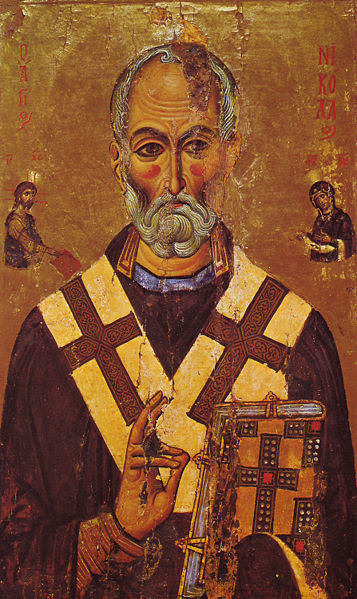
St. Nicholas
from Saint Catherine's Monastery
via Wikimedia


8: Who brings presents to children in December?
  1. Santa Claus does.
  2. The Christ Child does.
  3. Father Christmas does.
  4. Saint Nicholas does.
  5. Sinterklaas does.
  6. All of the above.


9: When is Christmas in Australia and New Zealand?
  1. In fall.
  2. In winter.
  3. In spring.
  4. In summer.
  5. In autumn.
  6. All year long.


10: What do Americans do on Christmas Eve?
  1. Go on dates with their special girlfriends or boyfriends.
  2. Visit the families of their special girlfriends or boyfriends.
  3. Go to Church for religious services.
  4. Go to Church for a Christmas party or dance.
  5. Stay home with their families.
  6. Work overtime.
  7. Different people do different things at different times.


Answers:

1: (E). See #5.

2: (B), although it varies in some traditions.

3: (A). (The evening before Christmas.)

4: (E). Fir trees are common elements of many religions and traditions, but had no particular meaning in early Christianity.

5: (E). There is no record of the actual date. According to some people, the accounts in the Bible indicate a date in late summer or early fall. Other people suggest a date in spring. The arguments for winter are considered rather weak.

6: (E). Although there is no record of the date, there are many records of arguments about the date, and of the official declaration of the state religion by Emperor Constantine.

7: (C): "Christ Mass".

8: (F).
  1. Santa Claus is a common tradition around the world.
  2. The Christ Child (Christkind) is a German and Austrian tradition.
  3. Father Christmas is a tradition in the UK.
  4. Saint Nicholas is a tradition in much of Europe, and the origin of Santa Claus.
  5. Sinterklaas is a tradition in Holland and Belgium. The red suit he wears is the origin of Santa's red suit.
  6. There are many more similar traditions in many countries.
9: (B). December is summer in the southern hemisphere. However, some people do try to remember the Christmas spirit all year long.

10: (G). The most common thing is to try to spend time with family.

PTA English December Topic -- Christmas, of Course

Well, it goes without saying that we will talk about Christmas.
お解りのことだと思いますが、クリスマスが今回の話題となりました。

We plan for a present exchange, so please bring an inexpensive gift. Please don't spend more than ¥1,000 on it.
プレゼント交換が計画に入っています。1,000円以下の、お金がかからない程度のプレゼントを持ってきていただければ、と思っています。

Of course, homemade (handmade) is fine!
お手作りならもちろん、うれしい。

Unfortunately, I haven't had time to make anything, so I'll bring something cheap.
恐れ入りますが、私は時間に迫って手作りなどに手を付けれなかったので、何らかの安いものを持ってきます。

[homemade/handmade: 自家製、手作り]

And it looks like we'll repeat the parlor game we tried last time. (The notes for the last lesson are here.)
前回の「パーラーゲーム」(居間遊び?)をまた今回もやって見るようです。(前回のノートはここにあります。)

[JMR201701031415:
If I have time, I'll introduce a Christmas themed parlor game or two.
時間の余裕があれば、クリスマス関連のゲームも紹介してあげましょう。
(Nothing but games. :-)
The notes for December 2016's Christmas party are finally up.
2016年12月のクリスマスパーティのノートをやっとう投稿できました。
Sorry it took so much time. Maybe we played too many games.
こんな時間かかって、ごめんなさい。ゲームが多すぎたかも知りません。

]

[JMR201612132252: 

I put together a Christmas quiz of sorts in English. I don't know yet if I'll use it in class.
何らかの英語のクリスマスクイズを作りました。授業に使うかどうかはまだ決めていません。

]

[JMR201612161326:

Here's a little dialog about the date of Christmas that I started last year and finished today:
去年、クリスマスの日付を特定することについて、対話例を書き始めたけど、今日なんとか完成しました。

]


I posted a very few notes on Christmas a few years ago, here.
数年前のことでしたが、クリスマスについて少しだけの参考になるようなものを投稿しました。ここです

[JMR201612131512: 

Finally got the Christmas notes from last year up. Sorry it took so long. And you might be interested in the errata about winter solstice.
やっと去年クリスマスノートを投稿しました。こんなに時間がかかってすみませんでした。そして、冬至についての誤報訂正も面白く思っていただけるかも知れません。 

]